What Are Green Schools and Why They Matter
April 30, 2025
What is a Green School?
When people hear “Green School,” they often picture solar panels, school gardens, or maybe a greenhouse out back. While those are pieces of the puzzle, the full picture is much more powerful.
A Green School integrates sustainability into every aspect of the learning experience: from the design of its physical space to its curriculum, culture, and community impact. It’s a school that not only teaches sustainability but lives it, showing students, educators, and families what a healthier, more equitable future can look like—and empowering them to lead the way.
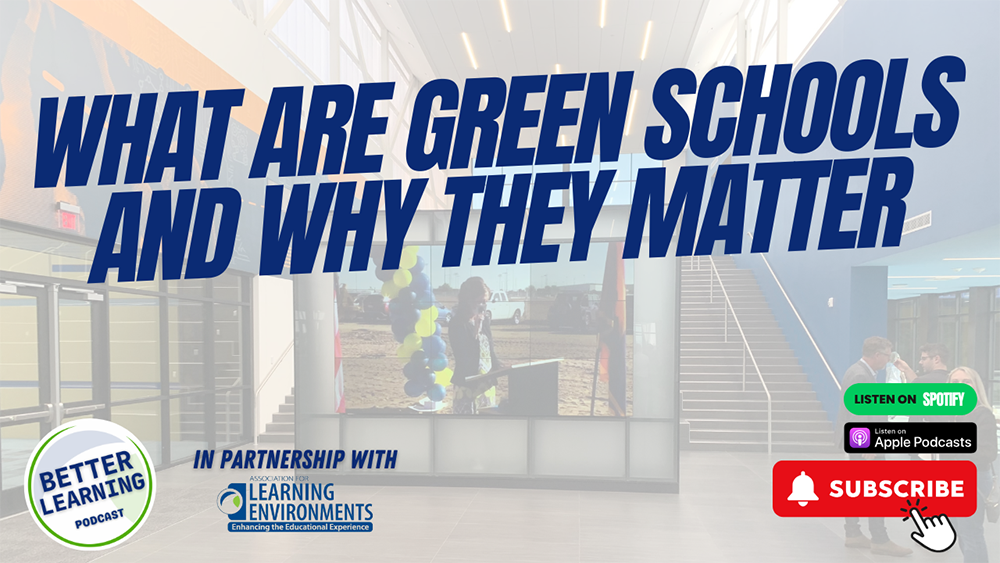
In our latest episode of the Better Learning Podcast, we dive into why Green Schools matter now more than ever. With nearly 100,000 public schools across the U.S., the stakes are high. School facilities don’t just house students—they influence how well they learn, how healthy they are, and how connected their communities feel.
We explore the current challenges in school infrastructure, including the startling reality that many buildings still lack basics like proper ventilation or air conditioning. These gaps disproportionately affect underserved communities and create barriers to learning and well-being.
A Green School aims to change that. By reducing environmental impact, improving health and performance, and delivering sustainability education, these schools set the standard for how we treat each other and the planet. They become catalysts for change—transforming not just students, but entire communities.
Takeaways:
- Green Schools go beyond solar panels and gardens. They integrate sustainability into curriculum, culture, and community.
- Millions of students attend outdated schools every day — with nearly 100,000 public schools across the U.S. and over 7.5 billion square feet in need of modernization, the learning environment is failing to keep pace with student needs.
- School leaders play a critical role in long-term sustainability. Partnering with experts who prioritize healthy, future-ready design ensures that new school buildings serve students and communities for decades to come, not just on day one.
- Schools can take advantage of available tax credits and funding by prioritizing sustainable building practices.
About The Guest Panelists:
Jana Silsby, DLR Group:
LinkedIn:
www.linkedin.com/in/jana-silsby-450b7a13/
Phoebe Beierle, U.S. Green Building Council:
LinkedIn:
www.linkedin.com/in/phoebebeierle/
Sara Ross, UnDauntedK12:
LinkedIn:
www.linkedin.com/in/sarajross/
Connect with episode host, Carla Cummins:
LinkedIn:
www.linkedin.com/in/carla-cummins-01449659/