2025 AIA/CES Conference Session Participation Form »
Friday | May 16, 2025
8:00 AM – 12:00 PM
| |
Note: There will be 2 buses per route and each bus will have their own schedule. Self-driving is not permitted. Tour sign-up will be sent to attendees registered for the conference only. |
Tour A
Artondale Elementary School
Tour Brochure »
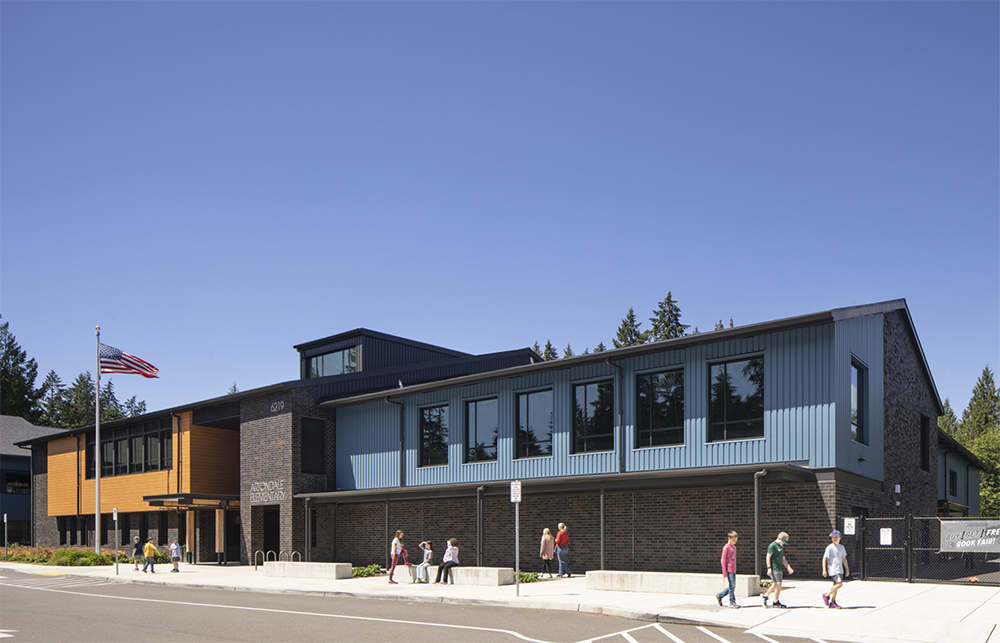
The design of the new Artondale Elementary School reflects the Guiding Principles established during the Educational Specification process, ensuring a facility that is efficient, welcoming, and secure. The approximately 68,000 SF, two-story school is being constructed on the site of the existing Artondale Elementary School in Gig Harbor, WA. Designed to serve students for the next 50 years, the school will feature low-maintenance, highly durable materials and flexible spaces that support evolving educational needs while minimizing long-term costs for the Peninsula School District.
Site planning prioritizes safe and efficient circulation for students, staff, and the community. The 9.07-acre site incorporates dedicated access points for buses and parent drop-off, as well as parking for approximately 95 vehicles. Fire lanes, pedestrian pathways, and student play areas—including a main playground, covered play structure, and playfield—are designed for safety, supervision, and accessibility.
The building is strategically positioned to optimize access, daylighting, and connectivity with the surrounding environment. A clearly identifiable main entrance faces east, while a grand stair connects the centrally located two-story classroom wing. Early learning spaces are positioned on the quieter, wooded south side, while the Commons and Gym provide direct access to playfields. A second-level library serves as a focal point, reinforcing the school’s identity as a center for learning.
The exterior design harmonizes with the local neighborhood, using a durable palette of masonry, storefront glazing, and metal cladding. Thoughtful placement of windows, materials, and colors enhances the building’s warmth and character, creating an inviting and enduring learning environment.
Learning Objectives:
- Understand the Design Principles: Learn about the guiding principles that shaped the design of the new school, including efficiency, flexibility, safety, and long-term sustainability.
- Explore Site Planning and Circulation: Examine how the site layout supports safe and efficient movement for students, staff, and visitors, including designated drop-off zones, pedestrian pathways, and outdoor learning spaces.
- Analyze the Building’s Organization and Functionality: Gain insights into how the school’s layout enhances learning, with a focus on flexible classrooms, shared learning spaces, and the integration of natural light and views.
- Evaluate Sustainable and Durable Design Elements: The tour will highlight the materials and construction methods used to create a low-maintenance, energy-efficient facility that reflects the character of the local community.
Project Team:
Architect of Record & Structural Engineer: Integrus
Landscape Architect: AHBL
Electrical Engineer: TFWB Engineers
Civil Engineer: AHBL
Contractor: Lincoln Construction Inc.
Owner: Peninsula School District
Swift Water Elementary School
Tour Brochure »
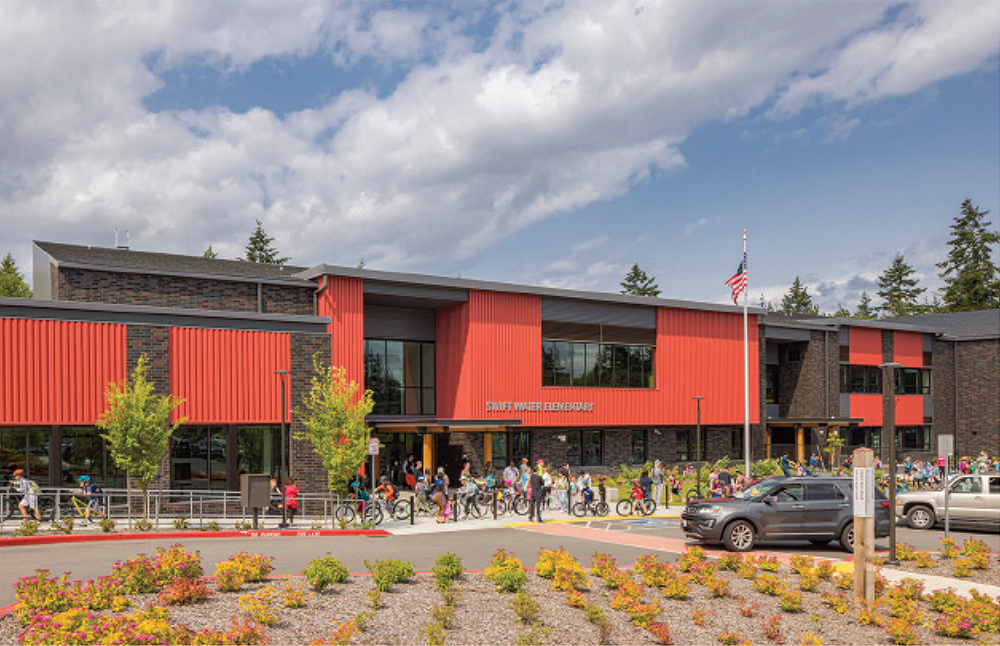
The Swift Water Elementary School is located in the Harbor Hill neighborhood of Gig Harbor and will serve 550 students. Key organizing factors of the site and building include: an easily identifiable and accessible front door, zoning of the building for school and community use of facilities, separate areas for bus and parent drop-off traffic flow, and clearly organized program functions to maximize learning opportunities. The building is also organized to take advantage of the ample opportunities for daylight and sweeping views to the forested properties surrounding the site. The two-story classroom wing is located on the eastern, quieter side of the site, adjacent to the wooded eastern buffers.
The design team integrated best practices in educational facility design to create a building that is efficient and effective, welcoming and secure. The building provides an identifiable “heart of the school” in the Commons, to create a warm, welcome place to gather and play. Both the main entrance to the school and the bus loading zone will lead students to the Commons to serve as a gathering space before the start of the school day. To allow for both visual supervision and opportunities for informal interaction between students and staff, administration and student services are located near each other and adjacent to the Commons.
Learning Objectives:
- Understand Site Organization & Traffic Flow: Explore how the school’s site design effectively separates bus and parent drop-off areas, ensures safety, and facilitates easy access for students, staff, and the community.
Analyze Learning Environment Design: Examine how the building layout, daylight access, and adjacency to forested areas enhance student learning, well-being, and engagement.
Evaluate Community & Security Integration: Learn how the design balances an open, welcoming atmosphere with secure access points, strategically placed administration areas, and a centralized Commons to support both school and community functions.
Identify Best Practices in Educational Architecture: Observe how modern educational facility design principles—such as flexible learning spaces, visibility for supervision, and multi-functional gathering areas—are implemented to create an effective and inspiring school environment.
Project Team:
Architect of Record: Integrus
Landscape Architect, Structural & Civil Engineer: AHBL
Electrical Engineer: Hargis Engineers
Contractor: Neeley Construction
Owner: Peninsula School District
Pioneer Elementary School
Pioneer Elementary in Gig Harbor, WA is a recently constructed school facility that showcases the latest in educational design and sustainability practices. Opened in 2022, the school was designed to provide an engaging and collaborative learning environment for its 550 students in grades K-5.
The one-hour tour will highlight several key features of the campus. Visitors will begin in the light-filled main entry lobby. From there, the group will visit one of the school’s classrooms and flexible learning space. These open, adaptable spaces allow teachers to configure the room for different teaching modalities, from individual work to large group discussions.
The tour will also include a stop in the STEM lab, a dedicated space for hands-on, project-based learning in science, technology, engineering and math. The lab is equipped with a variety of tools and technologies, including 3D printers, robotics kits, and more.
Sustainability is a core design principle at Pioneer Elementary. Visitors will learn about the school’s energy-efficient features and the schools transformation as the previous home to the Gig Harbor Boys and Girls Club.
Finally, the group will visit the outdoor learning environments, where students can engage in activities ranging from creative play to environmental science lessons.
Throughout the tour, attendees will witness how Pioneer Elementary’s innovative design supports the school district’s vision for 21st century learning.
Learning Objectives:
- Understand how the school’s flexible learning communities and STEM lab support personalized and collaborative learning experiences for students.
- Explore the sustainable design features of the school, including the shared spaces, STEM lab and outdoor learning environments.
- Observe how the school’s innovative architecture and educational spaces align with the district’s vision for 21st century learning.
- Gain insight into how the school’s spaces are used to engage students in hands-on, interdisciplinary activities.
Project Team:
Architect of Record: TCF Architecture, PLLC
Landscape Architect: Berger Partnership
Structural Engineer: PCS Structural Solutions
Electrical Engineer: Hargis Engineers Inc
Civil Engineer: ESM Consulting Engineers LLC
Contractor: Forma Construction
Specialized Consultants: Acoustic – A3 Acoustics; Surveyor – AHBL; Mechanical Engineer – Metrix; Food Service – Stafford Design Group Inc; Envelope Consultant – Nexus Building Envelope Consultants Inc; Hardware Consultant – Adams Consulting and Estimating
Owner: Peninsula School District
Tour B
Pope Elementary School
Pope Elementary School, which was transformed by a modernization and addition completed during the COVID pandemic, is home to 730 students in grades Pre-K through sixth grades.
The original Pope Elementary building was constructed in 1981 and named after Ms. Florence Pope, a longtime teacher and administrator in the Puyallup School District. The 2015 Bond funded a modernization and addition to meet the District’s growing capacity needs and bring the learning environments into alignment with the Educational Specifications. Engagement with the school community uncovered what was working and not working well in the existing school, what needs were not being met by the building, and their hopes and dreams for a new Pope Elementary. Guided by community voice, early planning studies explored multiple programming scenarios correlated with different combinations of renovation and new construction.
A New Heart:
Pope Elementary School needed a new heart – a place for the school community and the students’ networks of support to gather. In response, the addition creates a new Entry and Commons to bridge between the old building and the new. Targeted interventions in the existing classrooms, such as the addition of skylights, the replacement of finishes, and the continuation of environmental graphics, creates a cohesive learning environment throughout all parts of the school.
Learning Objectives:
- Learn how the planning and design process balanced priorities and resources between renovation and building addition.
- Identify design strategies that maximize the impact of renovation scope and dollars to improve the quality of the learning environments.
- Experience how experiential graphic design is used to transform a school’s learning environments and knit together renovated areas with newly constructed areas.
- Describe a process for selective upgrade of existing building systems to meaningfully extend their useful life, utilize existing campus resources, and meet building codes.
Project Team:
Architect of Record: Mahlum Architects
Landscape Architect: Fora Landscape Architects
Structural Engineer: Coughlin Porter Lundeen
Electrical Engineer: Hargis Engineer
Civil Engineer: LPD Engineering
Contractor: Pease & Sons, Inc
Specialized Consultants: A3 Acoustics; GeoEngineers; Clevenger Associates; Gordon Adams; Sitts & Hill Engineers
Owner: Puyallup School District
Kessler Center
This two-story, 38,000 SF facility houses five of Puyallup School District’s special needs programs under one roof, offering a unique, non-traditional learning environment. The design prioritizes flexibility to support the evolving needs of students, with adaptable spaces and furniture that can accommodate changes in technology, curricula, and program requirements.
Inspired by community college campuses, the facility features a campus-like feel, with a covered sports court and ample natural light throughout, thanks to large windows, skylights, relites, and operable glass partitions. Flexible gathering areas offer students and families comfortable spaces to meet. The facility serves a diverse range of students, including those in the Digital Learning, Highly Capable, ChildFind, Special Services, and Advance programs. The Advance program focuses on life skills and job training for graduated special education students, offering both work and instructional opportunities in dedicated, flexible spaces.
The practice kitchen provides valuable life skills training, while the 2,100 SF multipurpose collaboration room serves as a space for both student activities during the day and district-wide events after hours. The design also provides welcoming common areas and meeting rooms, offering the District versatile spaces for board meetings, staff training, and other professional functions. The goal was to create a balance between an innovative educational setting and a professional work environment.
Thoughtful design features include cozy window nooks with seating and tables in the office corridor, an all-glass conference room, open offices on the upper floor with access to a roof deck, and a quiet zone specifically designed for test preparation and students experiencing test anxiety. This area is equipped with intentional lighting and comfortable seating to promote focus and relaxation.
Learning Objectives:
- Integrating Community Resources into Educational Environments: The Kessler Center houses the Advance program, supporting graduated special education students by providing life skills training, job readiness programs, and opportunities for both work and instruction.
Design Strategies for Security and Flexibility: Welcoming common spaces and meeting rooms offer the District flexible options for board meetings and staff training, with rooms that can be easily converted to accommodate board meetings.
Enhancing Learning through Innovative Space Utilization: The Kessler Center features flexible furniture that can be rearranged to suit various needs. It offers a variety of learning spaces, including tall seating, quiet areas, and flexible group spaces for collaboration. There is also an outdoor space for staff to enjoy. Additionally, the staff collaboration area is designed with a hotel-style layout, featuring tables and a wall-mounted monitor to support innovative teamwork and communication.
Technology Advances Students have the option to learn online, or attend classes held at the Kessler Center. This unique blend of in-person and online learning is seamlessly integrated, offering a smooth transition between virtual and on-site educational experiences.
Project Team:
Architect of Record & Landscape Architect: BCRA
Structural Engineer: PCS
Electrical Engineer: BCE
Civil Engineer: Sitts & Hill
Contractor: Pease and Sons
Specialized Consultants: Building Envelope – Wetherholt
Owner: Puyallup School District
Agricultural Resource Center
The Farm is an 8-acre educational site, including wetland and native restoration planting areas, an orchard, and 2 full acres of vegetables.
Each year, student and community farmers grow over 50,000 pounds of produce for our school cafeterias, classes, and community!
The Agricultural Resource Center provides educational, support, and administrative space focused on improving student learning and exploration. The building replaces two portables that held administrative offices and provides a general education and science classroom which did not previously exist on site.
Learning Objectives:
- Understand the educational requirements associated with agricultural sciences.
- Explore the technology needed to support a gray water system that ties into irrigation for food production
- Learn about the limitations of only having exterior classroom space to support an agricultural CTE program.
- Understand the cost implications of developing a small project in a rural setting.
Special Instructions or Requirements for Attendees to be on Campus
Wear shoes that you can walk through fields in as we will be traversing the working area of the Farm.
Project Team:
Architect of Record: McGranahanPBK
Landscape Architect: SCJ Alliance
Structural Engineer: PCS Structural Solutions
Electrical Engineer: BCE Engineers
Civil Engineer: SCJ Alliance
Contractor: Jones and Roberts
Owner: Franklin Pierce School District
Tour C
| |
Special Instructions or Requirements for Attendees to be on Campus
The tour groups should plan to first visit Firgrove and then walk directly to Ballou. These two buildings are on the same site (but different addresses). No need for the bus to transport visitors between the two schools. |
Firgrove Elementary School
The new Firgrove Elementary School, designed to welcome and inspire, replaces the district’s previous and outdated facility, serving 730 students from Pre-K through sixth grade.
The campus blends nature and function, featuring outdoor learning areas, rain gardens, and lush landscaping that connect the school’s two-story classroom wing to the south with the one-story public wing to the north. These green spaces extend to the parking area and entry plaza as well, creating a vibrant and inclusive environment for students and the community.
A striking overhang shelters the main entry, which is crowned by a library bridge. This architectural centerpiece reflects the school’s role as a source of pride and inspiration. The bridge serves as both a connector and a destination, with operable walls, transparent views, and distinctive staircases. The southern stair doubles as a learning forum with sweeping forest views, while the northern stair offers a dramatic descent into the commons, the social hub of the school.
The new building sends a message to the community that Firgrove is deservedly a place of beauty, pride and inspiration.
Learning Objectives:
- Understand how master planning the 40-acre campus informed the design of the new Firgrove Elementary School and strengthened its connection to Ballou Junior High.
- Identify architectural strategies that prioritize human health through the connection of learning environments to nature.
- Learn how the school was designed and constructed around an existing stand of mature fir trees.
- Learn how the site and building design responded to the challenge of shallow ground water.
Project Team:
Architect of Record: Mahlum Architects
Landscape Architect: Fora Landscape Architects
Structural Engineer: Coughlin Porter Lundeen
Electrical Engineer: Hargis Engineer
Civil Engineer: LPD Engineering
Contractor: Neeley Construction
Specialized Consultants: A3 Acoustics; GeoEngineers; Clevenger Associates; Gordon Adams; Sitts & Hill Engineers
Owner: Puyallup School District
Ballou Junior High
The modernization and additions at Ballou Junior High School increases permanent capacity by replacing 12 portable classrooms and presents a unique opportunity to transform the campus through interior renovations, a new auxiliary gym, and a new classroom/library building. This work also completes the vision of a larger, campus-wide master plan, which included shared facilities with the recently completed Firgrove Elementary School located on the south side of the same site. The plan focused on creating a strong connection between the two schools by taking advantage of a shared bus drop-off, outdoor plaza, covered play and community centric programs such as dining and library. The relationship of these new community spaces creates new welcoming arrival experiences for both schools. The schools are now open to each other providing a safe pedestrian link and opportunities for student and staff connections through shared use of resources. In addition to a new secondary campus entry, the classroom/library building at Ballou provides a clear campus edge by securing the exterior courtyards used by students and staff to circulate among the four separate buildings. Renovations, new construction, and site work were carefully phased in coordination with the GC/CM to allow for ongoing operations on the occupied campus.
Learning Objectives:
- Learn how the planning and design process created impactful campus wide improvements through limited targeted interventions.
- Explore how the traditional library program was reconsidered to provide a student-centric hub with adjacent maker space.
- Discover the transformation of the existing windowless library into daylit and visually connected new learning spaces.
- Understand how master planning the 40-acre campus informed the design of the new Firgrove Elementary School and Ballou Junior High additions.
Project Team:
Architect of Record: Mahlum Architects
Landscape Architect: Fora Landscape Architects
Structural Engineer: Coughlin Porter Lundeen
Electrical Engineer: Hargis Engineers
Civil Engineer: LPD Engineering
Contractor: Garco Construction
Specialized Consultants: A3 Acoustics; GeoEngineers; RH2
Owner: Puyallup School District
Expedition Elementary School
Bethel School District’s Expedition Elementary is nestled into a site within a new housing development, the first such Elementary in the district. The school was designed to be a beacon and community hub, while still acknowledging the suburban surroundings. The planning and design of the school embodies the design committee’s goals of welcoming, belonging, connection, efficient, empowerment, bright, and open. Centered around a courtyard, the building was designed as a “nest” planning for the excitement of the courtyard at the center of the building, utilizing acetylated wood and metal panels as exterior materials reinforce this natural feel. The unique plan of the building was achieved utilizing light wood framing and glulam beams which are showcased in the library and gym spaces. The courtyard acts as a secure place for outdoor learning as well as a circulation path or cut through on nice days. Shared learning areas and the commons also have direct access to the courtyard, enlivening the zones opening into the central hub and encouraging use of spaces outside of the classroom as learning environments. Classrooms were designed with large use of natural daylight, including a picture window, ensuring even the youngest Pre-K users would have views outside; additionally, each classroom utilizes an L-shaped plan to create a secondary, small group teaching area within the classroom for added flexibility and to align with the district’s goal of providing “push-in” services.
Learning Objectives:
- Learn best practices for implementing single-user restrooms in a K-12 setting.
- Explore design and planning techniques used to foster a sense of connection and belonging for a new elementary school in a newly built community.
- Understanding the opportunity and limitations of light wood framing when designing non-rectilinear buildings.
- See and understand the use of acetylated wood siding as a long lasting exterior material that creates a natural feeling in a courtyard.
Project Team:
Architect of Record: NAC
Landscape Architect: Fora Landscape
Structural Engineer: Coughlin Porter Lundeen
Electrical Engineer: NACE
Civil Engineer: Sitts & Hill Engineers
Contractor: Pease Construction
Specialized Consultants: AV/Acoustics – Greenbusch Group
Owner: Bethel School District